

Dreams of Stability
Tech’s New Corporate & the status in safety nets.
Everyone says they hate the question: What do you do? It’s cliché and reductive. But nobody stops asking, and nobody stops answering. Because the answer is never just about what you do. It’s about what people think you’re worth, and what you want people to think you’re worth.
What do you do? A few years ago, as far as the tech world is concerned, the cool answer sounded like ‘I’m starting something new’ or ‘We just closed a $1M seed round’ or ‘I’m all in on crypto.’ The unifying brag: I take risks. I don’t need a safety net. Now the cool answer sounds a lot more like ‘I’m at OpenAI’ or ‘I’m building something new at Stripe’ or ‘We just raised a $20M seed round.’
Prestige used to be ‘I might win big,’ because risk itself was glamorous. Now prestige is ‘I can’t lose, and I still might win big.’ If the brag used to be the bet, now it’s about having the best safety net you can get. Stability is the new status.
Dreams of Stability
The original American Dream was faith in work ethic. The second was faith in acceleration, made real by the internet era. The smartest or luckiest people got in early and rode the wave of new technology, platforms, and markets. Infinite impact, riches, and recognition were the seduction triple threat.
If it worked, you'd skip the 40-year career grind. The unspoken sacrifice was going all-in on the bet. It made sense at first. But platforms benefited more than the creators who grew them. Investors more than founders. Founders more than employees. People accepted lopsided terms because the dream The Social Network sold us was that compelling: kids became kings, and you could get a piece too.
Now AI is infiltrating every corner of society. The path calls again: get in early, launch the products, build the networks. But it feels different this time. The meme is the message: only a few years left to “make it” before you’re relegated to the “permanent underclass” — the final world order is set and you’re locked out.
The “permanent underclass” isn’t a fringe fear anymore. Vinod Khosla is cosigning posts about the K-shaped economy. Tech influencers are analogizing the AI inflection to COVID. Others are telling you to stop freaking out about a status quo that’s dead and climb the abstraction ladder.


The collective frenzy looks less like a gold rush and more like everyone’s taking shelter. “Anyone can do anything” sounds democratizing, but it means your edge is shrinking. Skills that took years to build are suddenly cheap. Companies can do more with fewer people. If you’re truly world-class, everyone still wants to hire you, but if you’re just very good, that might not be enough.
The second dream made us the assets, and the assets are repricing. The problem is we didn’t invest in much else. And now the world is unstable, and so are we. Ambition is reorienting from limitless ascension to find solid ground first. The upside used to be upside. Now, the upside is stability.1

There’s no shortage of essays about what comes next. I’d bet reality will be less sensational and cinematic than most. I’ve written about what human work looks like on a longer timeline, but this essay is about the near-term impulse — to figure out where stability is and align yourself with it. (Unless you’ve already permanently ascended to the post-economic class, in which case, ignore all this.)
New Corporate, or boarding the ships.
The obvious place to find stability is inside the biggest ships.
AI labs are building the new FAANG right in front of us. For top researchers and engineers, getting hired by top labs is like being drafted to the pro league. For everyone else, it's the best seat on the rocketships colonizing the new world. Every seat comes with solid comp, status, upside, and critically, a place at the table of the future.
The realest reason to join an OpenAI or Anthropic right now is proximity — to information, money, power, and whatever comes next. When nobody knows what’s happening, being first to find out is a hedge. The gig grants you options.
You’re boarding a ship that everyone expects to weather the storm. You’re aligning with Goliath when it’s impossible to tell who David is. You choose the Goliath that fits your brand. (And ship captains defect to board bigger ships.)
New Corporate is being on staff at a big AI lab, highly-funded spin-off, popular application company or infrastructure provider. Legacy big tech (eg. Google and Microsoft) and lovable big startup (eg. Stripe, Figma, Notion) are adapting to stay competitive in the New Corporate landscape. These are the adaptable safe havens with the perfect cocktail of stability and status and still some hope for upside.
But there are no guarantees. Companies are building the things that will replace us while preparing for layoffs and earmarking severance. Dario’s essays read like corporate eschatology — seeding the idea of welfare programs for employees made obsolete by the things they helped build. When the company tells you the machines are building themselves now, it’s some indication of the future.


Unsurprisingly, the incentives between founders and their teams are diverging. In other industries, workers might unionize. But Silicon Valley, which has prized meritocracy and free markets, historically relied on exit options. If you were laid off or didn’t like the terms, you went somewhere else. But it feels like exit options are narrowing. With skill being commoditized, fallbacks will be fewer. (We shouldn’t be surprised when tech workers start acting like workers.)
All this considered, people will keep joining the AI giants. Because right now the safety nets and the impact stories are pointing to the same organizations. You get to feel safe and righteous at the same time. And the upside is real, but more importantly, it’s probable.
For now at least, being inside the thing that will replace you still feels better than being outside it. The organizations that win the next era will figure out how to make people feel safe enough to do dangerous work.
Founding, with a safety net.
Taking a shot now feels like taking the last shot. You can bet it all or anchor.
People are saying the VC-backed path is low-status now. Inside tech, I’d agree it dropped — for a minute. But the fragility of every other route is bringing some of that status back. VC used to be high status for its signal — for the stamp, the unicorn potential, the dorm-to-empire myth. Now it’s high status more for what it tangibly gives you: time and shelter. Time because you get five to ten years of belief and a full bank account while everyone else’s timelines and budgets are shrinking. Shelter because it’s membership in an ecosystem that looks like it’ll survive.2
The aspiration shifted from “I’m a risk-taker” to “I’m protected.” And that’s recursive — because stability is what’s scarce now, so stability is the new status.3
VC always came with a safety net, but now the safety net is a real selling point. Founding a company is still a noble calling, and VC is still one of the best places to take a real shot from. But people instinctively want more safety hatches now — raise more, bank more runway, take money off the table, engineer a soft landing early.
The hottest play of the moment: Make something on the frontier that the AI labs haven’t figured out, get insane attention and reach, and let them buy you for a big check before they can crush you. Reactions to the OpenClaw announcement have the vibe of ‘congrats on securing the bag’ — on translating your surge to an impressive safety net. Taking the indie star in-house will trend.

The one-person-billion-dollar-company fantasy isn't what it's been glamorized as (a business that'll scale in absentia and print money forever with one guy at a laptop). It's actually just a hot acquihire in waiting. The person is more valuable than the product now because the product is outdated as fast as it's built.4
The solo unicorn has proven taste, product sense, attention sense, and an impressive ability to activate high-value communities. The scaled solo path increasingly is the scenic route to boarding the same big ships that will weather this storm, and win.
The middle is the trap. The middle of everything is hollowing. Mid-tier startups, mid-tier talent, mid-tier creative careers. You’re either at the frontier or local. If you’re going to risk it all, risk it on something hard and worth it — atoms, not bits. Research labs, deep tech, biotech, regulated sectors, even politics (VC is already reallocating here). Hard problems where the friction is the moat.
Indie, but not naïve.
I’m still bullish on Silicon Valley Small Businesses supercharged by AI. But the indie path has gotten noisy … because anyone can make anything now. Vibe coding and Claude Code mean what once required a technical team now just needs one person with good prompts and good taste.
I’ve been calling this the rise of the software creator. The market is real. But how much of what’s being made is serious? How much of it is just a shot at viral content or a job application masquerading as a company? How much of vibe coding is just adults playing with new legos? Tool, toy, and prop look the same.

In one way or another, everyone will “write” software — apps, art, workflows. But it doesn’t make sense to think everyone will do it as a career. Solopreneurs and three-person teams armed with agents are coming for legacy software, but that’s still a narrow lane. They will not and cannot eat the whole game.
I can caveat my own excitement: We live inside the tech bubble, so we forget most people don’t want to make their own apps, let alone anything else. And even if self-reliance and personalization is sexy, the gold standard of anything still builds fandom. This pull becomes both an edge and an incentive to keep improving it.
For years I’ve been building products mostly in small teams, and so much has changed. I can do more faster now, which is both exciting and boring. If I was lightly technical before, I’m moderately technical now. I’ve made at least a dozen products. I’ve shipped a few. But I only maintain a couple of them, as it should be.
Building is the easy part now. Taste is the differentiator. Maintenance is the filter. An audience is the pull. And fun is the lasting competitive advantage.5 (Yes, AI making it easier to produce but paradoxically that’s making people work more to maximally compound the leverage, but this isn’t a sustainable strategy.)
Power laws still rule. Even in a world where anyone can build, most of what gets built won’t matter. And people still want teammates. We still want to belong to missions larger than ourselves. The solo person with taste and a laptop was the hero of 2020-2025. By 2027, that person builds a tribe or joins one — big or small — or else gets eaten by one. You can start solo, but you can’t stay solo.6
Serving the Frontier, not owning it.
Serving the frontier instead of trying to own it is sexy now. More people seem to be building around tech rather than inside it.
Most of my friends in tech used to be founders, operators, or investors. Now many are executives, freelancers, writers, podcasters, filmmakers. Instead of joining the AI race, they’re selling shovels to the gold rush, and selling the polish too.
Selling into an industry swimming in capital is good business. It’s the same portfolio logic as VC, diversified bets on the ecosystem instead of one concentrated shot. Or you take your talents in-house, as Creative Director at startup or VC fund and trade some freedom for stability and scale.
Would you rather join the founder track or the new media fellowship? Work for A16Z or A24? These questions would have sounded absurd a decade ago. Not now. This is one of the clearest cultural turns in tech right now.

Prestige and price are catching up too. Creative talent used to be an afterthought but now it commands real respect and money. And attention is scarce, so the people who can engineer it set the price. As I wrote in Media and Machines: attention guys are the new engineers and engineers have become the skilled tradesmen. Builders can build, but few can make you feel.
You can see the shadow artists inside tech (designers in product roles, writers as content marketers) starting to step out. And you see outside creatives (eg. from tv/film) plugging in to tech — selling taste, narrative, and resonance as a service. The quality bar is rising fast, and the arbitrage won’t last long. And the taste economy has its own power law: a few people become known, most stay invisible.

The corporate-artist straddle is the new creator bet. The day job now needs its own day job. Serve the industry while you build your own name. It looks like a hedge and plays like a shot. For new creators especially, you get steady work that pays well and offers benefits all while building your network. Best case, you earn fans and feed your life’s work, maybe even get bought out or brought in-house for a big sum. I expect a generation of rich creatives and strong brands made here.7
Betting it all.
The other way to respond to instability doesn’t involve founding or even building anything. All it requires is leaning into the casino-ification of everything. Crypto cycles, memecoins, sports betting, prediction markets galore.
When traditional paths start feeling like lotteries, actual lotteries start looking rational. Some people respond to instability by seeking shelter and others roll the dice harder. The difference is mostly a function of how much you have to protect.
We used to gamble to escape the stable class, but now we gamble to secure a place in it. The real jackpot is total exit from playing other people’s games.

There’s no leaving tech.
Even if “tech” feels less stable or righteous than it once did, you can’t “leave” tech in any meaningful sense now.
Everything is tech. Culture itself has become intertwined with technology. Even if you’re not building software, you’re building on top of it or feeding it or both. Tech has infiltrated media, entertainment, sports, health. Now it’s pushing into industrials, manufacturing, medicine, energy, the physical world.
You could opt out — go to law school or med school or fashion school. But I’ve been in academia, art, medicine, and tech, and they’re all converging around technology too. Legacy structures only protect you for a while.
For the past two decades, tech mostly sold to itself — a white-collar economy of software people building for software people, intellectuals selling to intellectuals. It only interfaced with “normal” people through scaled social networks and two-sided platforms. Now it’s reintegrating with reality and places that aren’t SF.
So even as AI threatens white-collar jobs en masse, the ecosystem won’t fade. It’ll need founders, engineers, and operators to build. And it’ll need creatives to make it tastefully legible and desirably human. Our job is stay adaptable and find our fit.
The upside is stability.
For two decades, we were spoiled by the feeling that rising tides would lift all boats. You could forgo the structured paths of the past and ride the wave up. That dream has plateaued. Now we’re looking for new structures that keep us near the frontier while giving us stability, and a tribe that will weather the storm.
Every hedger and every gambler is seeking solid ground. What looks like chasing upside — joining OpenAI, raising a big round, getting acquihired — is actually chasing stability, with upside a bonus. It’s palpable even if nobody says it out loud.
Every stakeholder is selling something — the accelerationists, trad propagandists, hustle culture holdouts, VC millenarians. Every shout is an agenda. Often they’re selling you risk from a place of stability. “Running out of time” is a rallycry I don’t willingly subscribe to, and yet it’s how many of us feel. What’s true is that time is always running, and it keeps running, whether we do or don’t, or we panic or not.
The concept of enduring “career” itself is eroding — and it’s highly destabilizing for American culture, in which identities have revolved so heavily around work for so long. Hence the instinct to find stability is extending well beyond careers. The so-called “trad” resurgence has a dozen political explanations. I think it’s simpler.
The trad return is emblematic of our increasingly urgent search for stability outside the internet-era ladder of careers and socioeconomic mobility. It’s a turn towards things that compound even when systems fail. Home, family, faith, body. Wellness, fitness, biohacking, longevity. New aesthetics, same instinct to find stability wherever we can get it.8
Everyone needs minimum viable stability. And it’s best built as a portfolio — work, health, relationships, identity. Stability isn’t just money but whether your life can absorb shocks. We’re realizing we’re underprepared.
Signal is giving way to shelter. Rugged individualism is giving way to tribes. Going all-in on career is giving way to going all-in on life. The things we dismissed as soft are becoming the load-bearing.
We’re learning the lessons every generation learns in their own way.
We’re all dreaming of stability. But this isn’t retreat from ambition. People still want to take big shots. They just want to take them from more stable ground. The paradox is that we can’t find lasting stability in any credential, company, or career ladder. We can only find it in ourselves, our craft, and our people — closer in than we were sold these past twenty years.
This is part 1. Part 2 to come. If you enjoyed it, share it with a friend or community that might enjoy it too. DMs welcome - reply to this email, via Substack, or Twitter.
Recently popular essays:


Art:
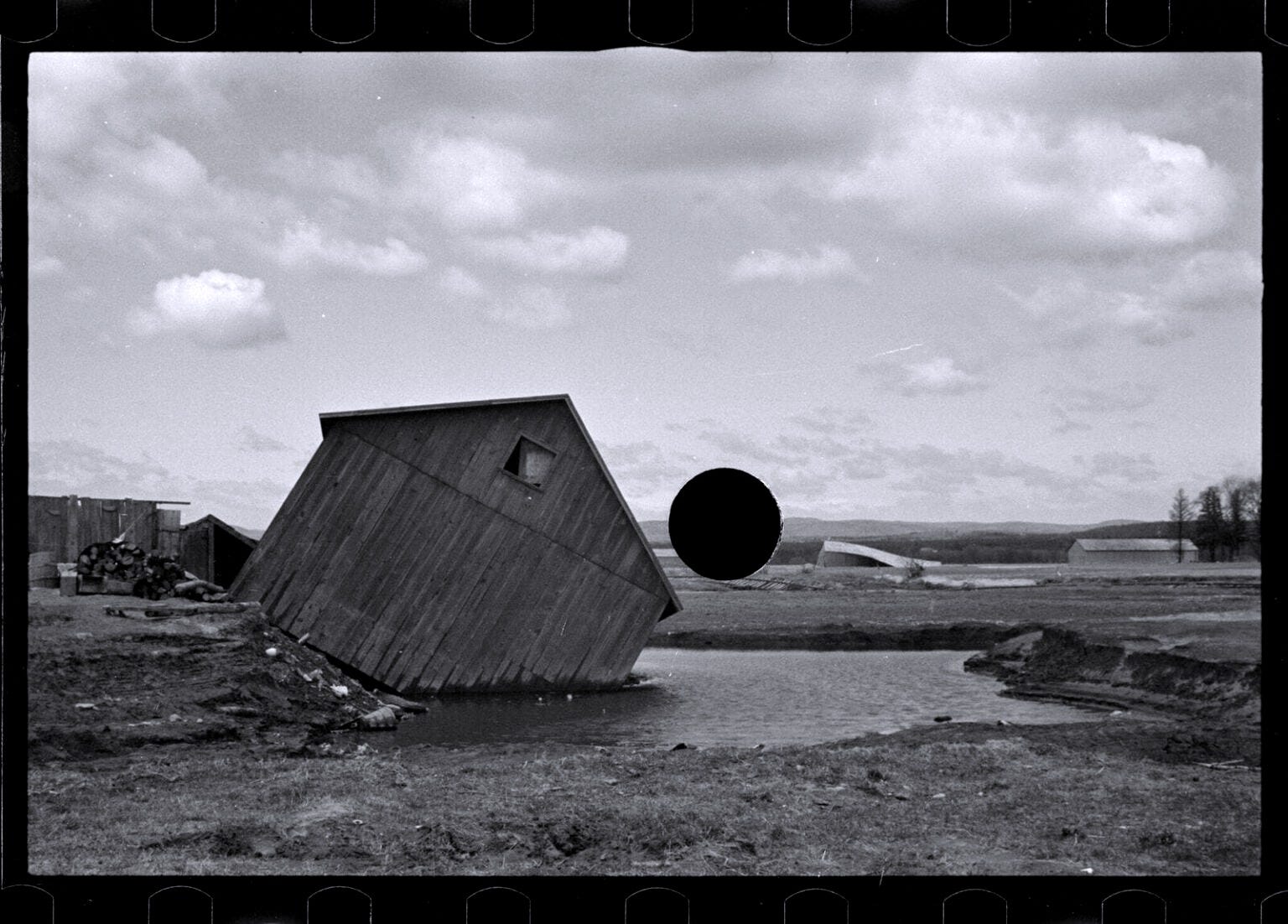
Paul Carter’s Untitled (1936)
movie still from Frances Ha (2012)
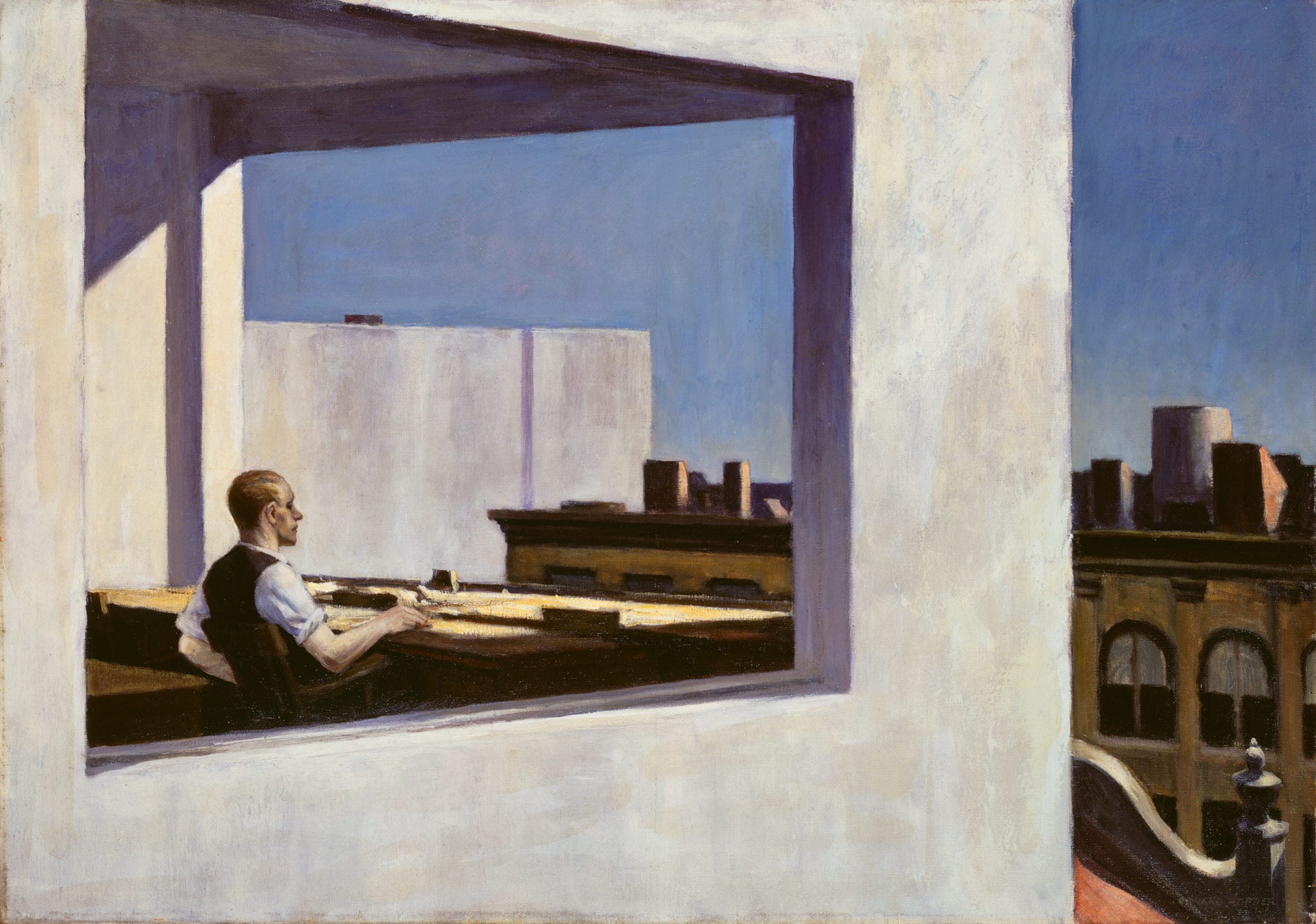
Edward Hopper’s Office in a Small City (1953)
Andy Warhol’s Untitled (~1960)
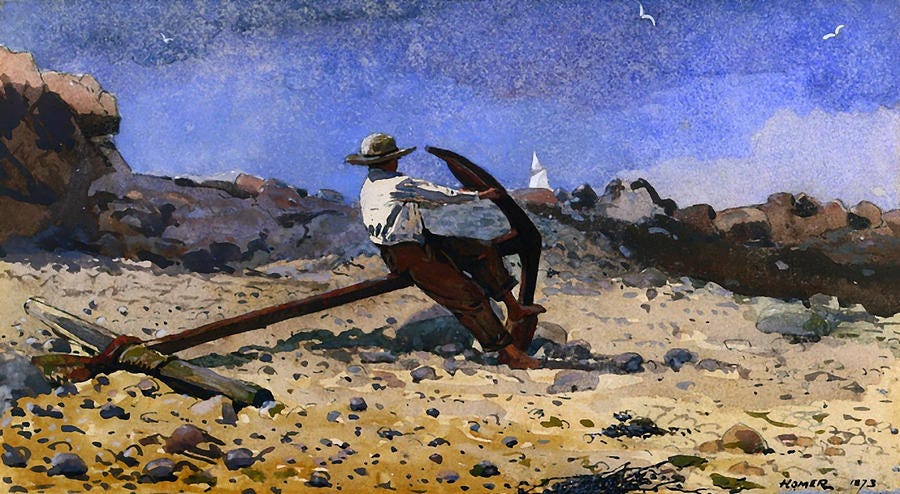
Winslow Homer’s Boy with Anchor (1873)
Lest this sound like your parents’ advice, the new stability is still pointed at the frontier. Everyone still wants to take shots, just from a solid base. If the old was “fail first, find a fallback later,” the order has flipped.
The flip side of the system benefits too. Being an investor or operator inside a big VC firm that’s sure to weather the storm, and in all likelihood gain more resources and power along the way, is New Corporate too.
A meta point is that nothing holds status the way things used to because attention is too fragmented and cycles too fast. The half-life of any signal is shorter than ever, whether that’s a unicorn exit or winning an Oscar. Part of why stability feels so appealing is it’s the one thing that doesn’t decay instantly.
The value is the person as creator and figurehead, the community as earned activation, engagement, and distribution, and whatever secret sauce made it all happen so fast.
AI makes creation easier, which paradoxically makes us work more to maximally compound the leverage we’ve gained, and this isn’t sustainable. And building with AI feels a bit like gambling. You feed tokens into the machine, ask it a question, see if you like the fortune, then do it again. Doomprompting is the new doomscrolling …
The indie safety net is paying customers or a generous grant. I hope and expect we’ll see more of the latter — courtesy of the big AI ships, VCs, New Corporate operators, and post-economic founders themselves.
Celine Nguyen’s essay on artists’ struggles to make money, a problem only getting worse, is worth reading. And, of course, selling shovels has its constraints. You’re always one layer removed from the core of the business and dependent on the industry staying hot. Service businesses are hard to scale and hard to exit.
Looksmaxxing isn’t exactly trad but it’s back to basics, to elements that feel like you can single-handedly shape them. It’s a new take on an old status game that isn’t career.
Stability is the new status symbol. But we won’t find true stability in a credential, career ladder, or industry. We will find it in ourselves, our craft, and our people. The stability that lasts will come from closer in.
This hit hard ! Solid point....sort of like investing the minimum viable stability of home, friends and self when outside world is free falling !
“You get to feel safe and righteous at the same time. That’s a hard combination to walk away from. For now at least, being inside the thing that will replace you still feels better than being outside it”
I left a tech startup that I was at for two years to work as a server in a restaurant. I realize it’s not financially sound, but my mental health has definitely improved drastically. Having something very personal, like my passion for building things, used to create capital for a world that commoditizes the entire internet, without permission from the creators of the content, and then sells it back to you in the form of chatbot services, burned me out to say the least.
I haven’t coded for 6 months now or applied for any other jobs in tech because I just have no desire to right now. Instead of building my portfolio I would rather just code something pointless and fun when I get back into it.
“If you want to make the wrong decision, ask everyone.” — I feel like with all the doom and gloom, we underestimate the value of living in the present and doing what’s right for us personally.
Good luck out there y’all!